
We had a long morning coach-ride through extremely pretty countryside to the town of Meissen, which is world-famous for its incredible pottery.
Once we reached the factory we were treated to a fascinating tour of their works, as well as its museum, together with demonstrations of their creative processes. Needless to say we then passed through their gift shop, but with items for sale there costing up to £250,000 we could only afford to buy ourselves the smallest of souvenirs!
 |
 |
 |
 |
'Throwing' a pot |
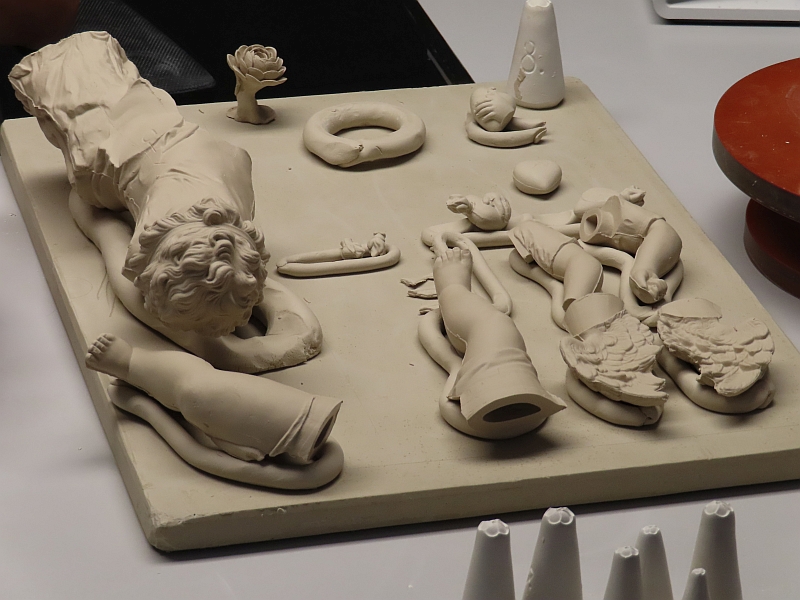
Making and assembling the small components |
Painting a plate |
|
 |
 |
 |
 |
 |
There were exquisite table decorations in their museum ... |
... as well as many wonderfully crafted animals ... |
... including an elephant ... |
... and some penguins |
There was even a china pipe-organ |
 |
 |
 |
 |
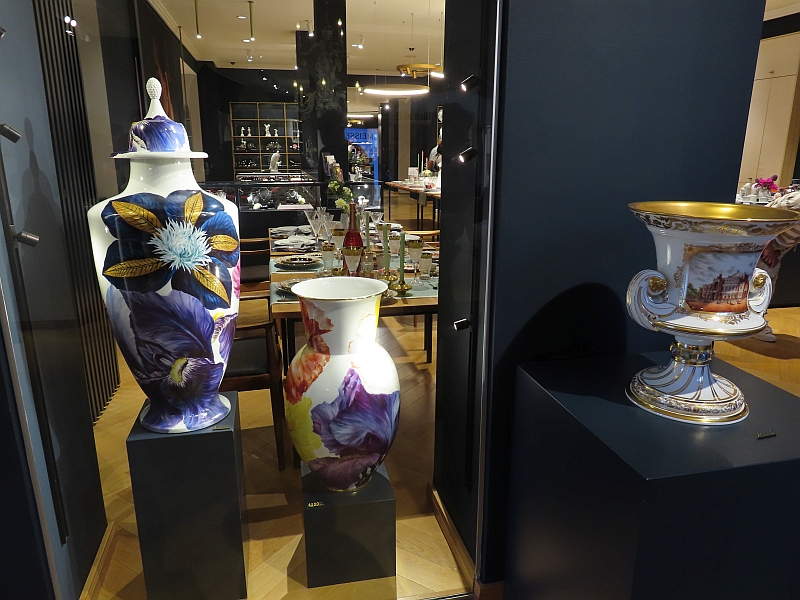
Some of the beautiful items in their gift shop |
|||
Leaving the factory we headed to the old Town Hall (Rathaus) for a very tasty lunch, before we had a short time to stroll around the town of Meissen which was buzzing with activity as they were having a wine festival that afternoon There literally were thousands of people thronging the streets, enjoying lively music of all types and partaking of the amazing range of foods and wines available from the hundreds of stalls which packed every street.
The coach then took us to Dresden, where we joined our second ship, the Viking Beyla.
 |
 |
 |
At Meissen's festival there were pretzels of up to 12" diameter |
The stairwell of MS Beyla had a wonderful painting of Beyla, farm servant to the Norse Gods of fertility, representing earthly bounty |
Dresden at night, from the deck of our ship |
We were made extremely welcome on board the Viking Beyla, which was to be our home for the next 3 nights. After the Captain's welcome party, and a sumptuous meal, we were treated to a wonderful on-board concert from an excellent string trio.
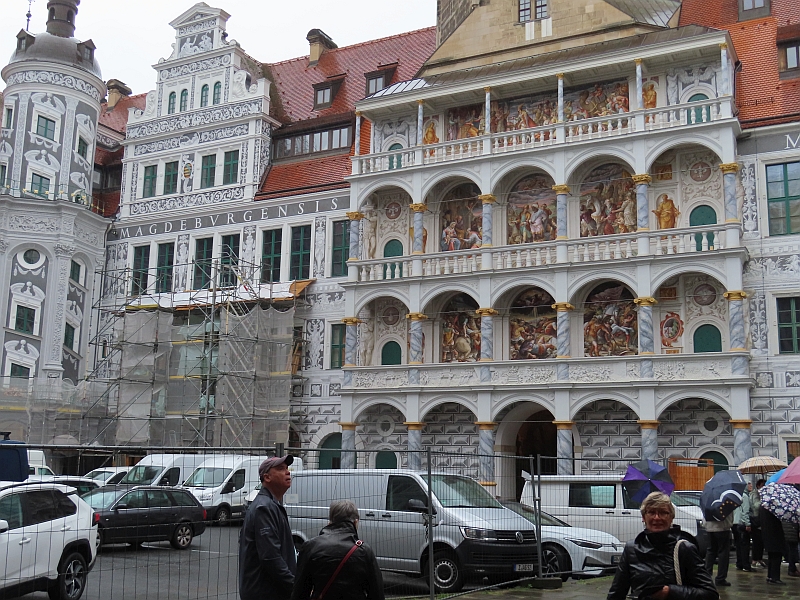
After a summer so dry that we had nearly had to cancel two holidays, when temperatures in Southern France had reached 48 degrees Celsius, the next day was uncharacteristically wet so we were grateful that our tour of Dresden was initially by coach and then mainly indoors. The city of Dresden is beautiful; after being almost completely destroyed during the air-raids of WW2, in contrast to Berlin the major buildings of the city have since been painstakingly restored using their original bricks in accordance with the original plans so that you would not know that they had ever been damaged.
 |
 |
 |
 |
Wonderfully restored buildings in Dresden |
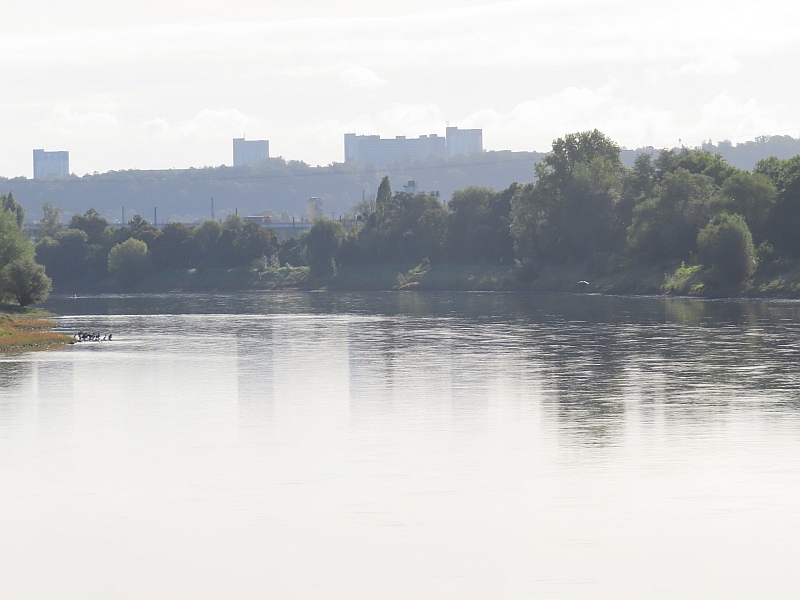
The castle across the river from our ship |
||
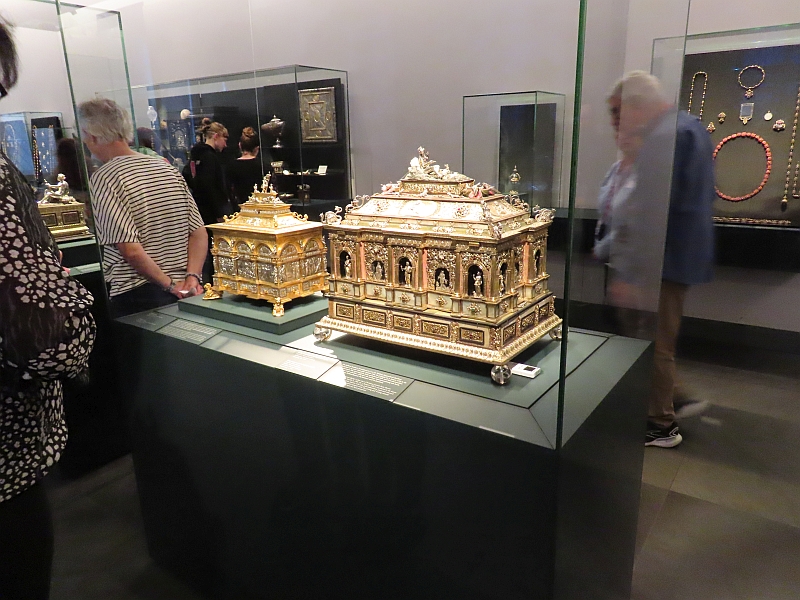
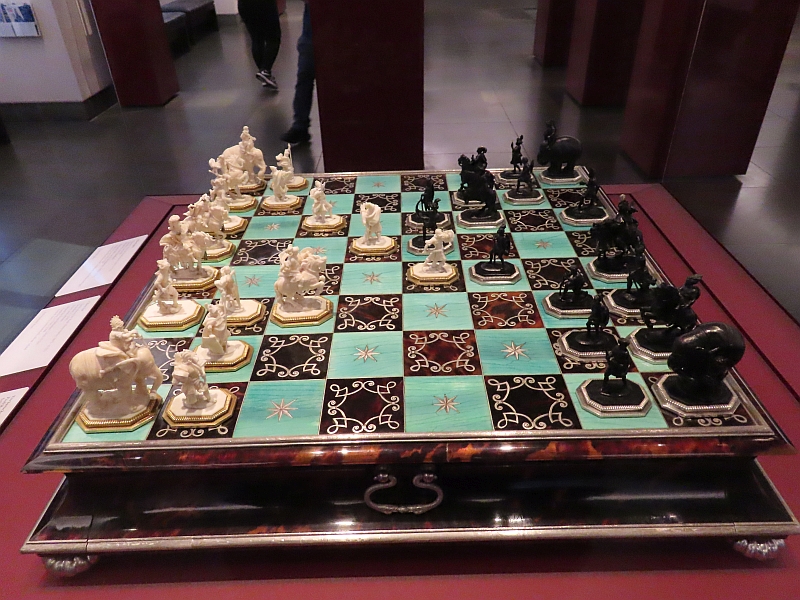
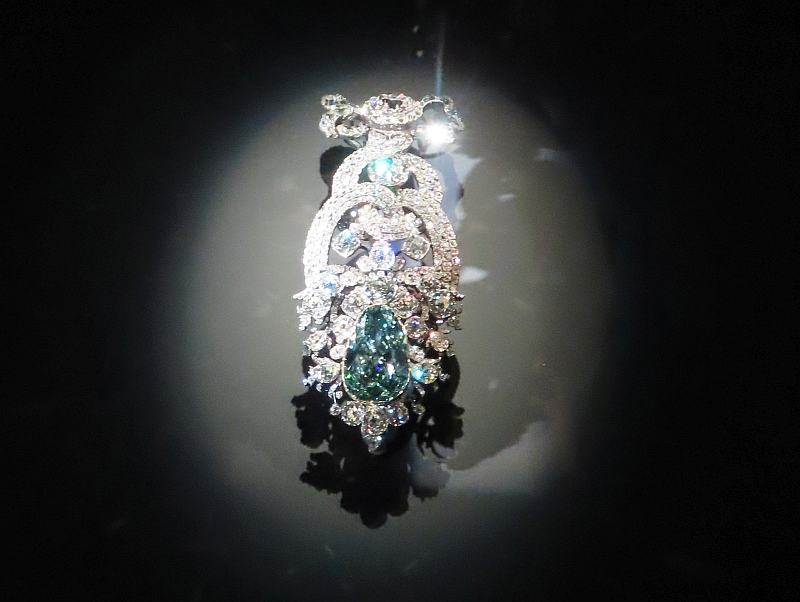
Amongst other beautiful buildings, we visited the Zwinger Palace which houses the most incredible collection of exquisite treasures in gold, silver, crystal, and diamond (including the largest green diamond in the world, worth around £10M). Their vault is also known for the fact that in 2019 it suffered one of the world's biggest ever diamond heists (most items were eventually recovered because they were too well-known to be sold).
 |
 |
 |
 |
In the museum there were many amazing models ... |
... and other beautiful works of art |
A ball of rock crystal circles this clock in exactly one minute as another ball inside is lifted, Saturn strikes a gong and the minute hand moves on. Twice a day the musicians lift their instruments and an organ plays |
|
 |
 |
 |
 |
Carved from ivory in 1620, this ship has a crew of 50 tiny carved ivory sailors |
This crystal galley was made in 1697. It then broke in two, and it was 8 years before it was properly repaired |
Not just any old drinks pitcher, this is rock crystal encrusted with jewels |
A beautifully carved and decorated elephant |
 |
 |
 |
 |
Gold-plated pottery table-ware |
In this glorious temple scene ... |
every person is individually carved and painted |
At over 40 carats, this is the world's largest green diamond |
After exploring Dresden we were happy to have an afternoon just lazing around on the ship, followed by the most wonderful meal of Chateaubriand steak and Chateauneuf-du-Pape wine. Most of the passengers then went to bed, and we felt sorry for the ship's resident musician as we and just 2 other people sat in the bar to enjoy his performance. That evening the good news came through, that the rains had caused the river level to rise just enough that we would be able to spend the next morning actually cruising!
 |
 |
 |
 |
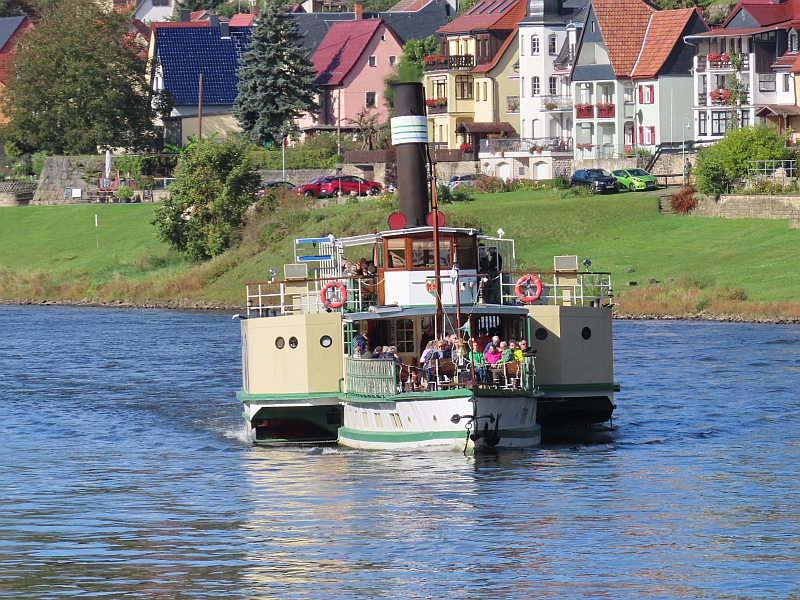
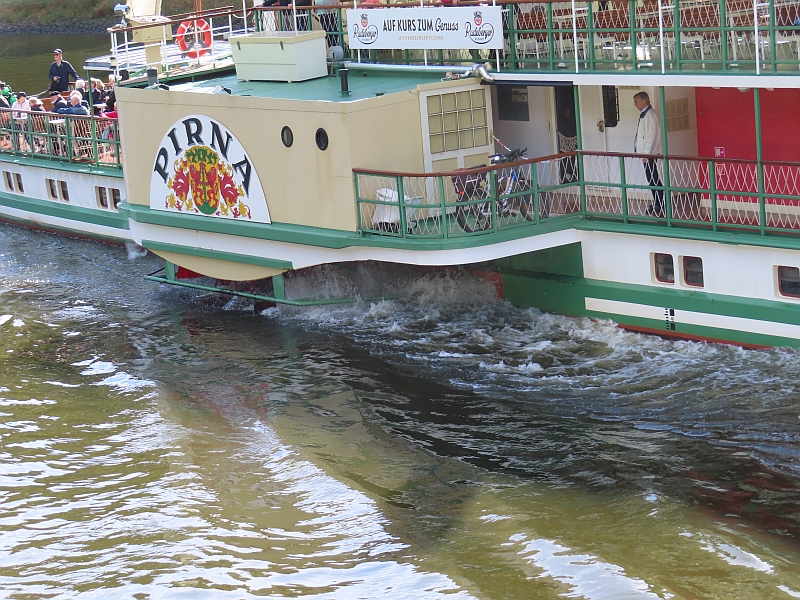
This beautiful steam paddle-steamer has a shallow draught so it was easily able to overtake us and lead the way into the magnificent Elbe Gorge, also known as 'Little Switzerland. |
|||
 |
 |
 |
 |
 |
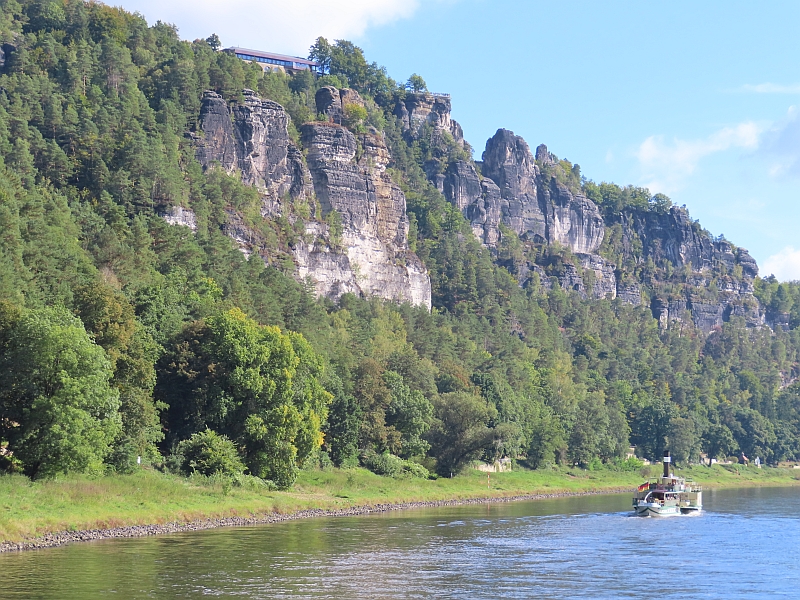
Heading up-river from Dresden |
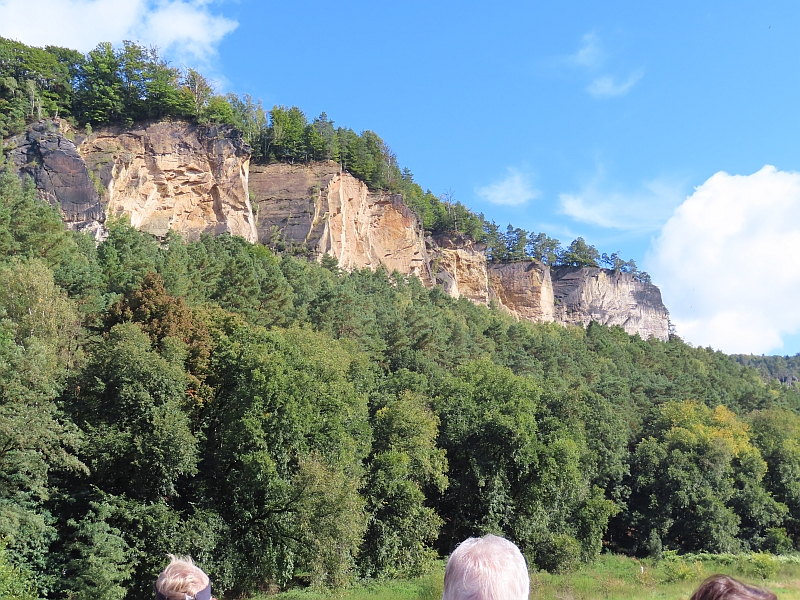
Cliffs rise as we enter the Gorge |
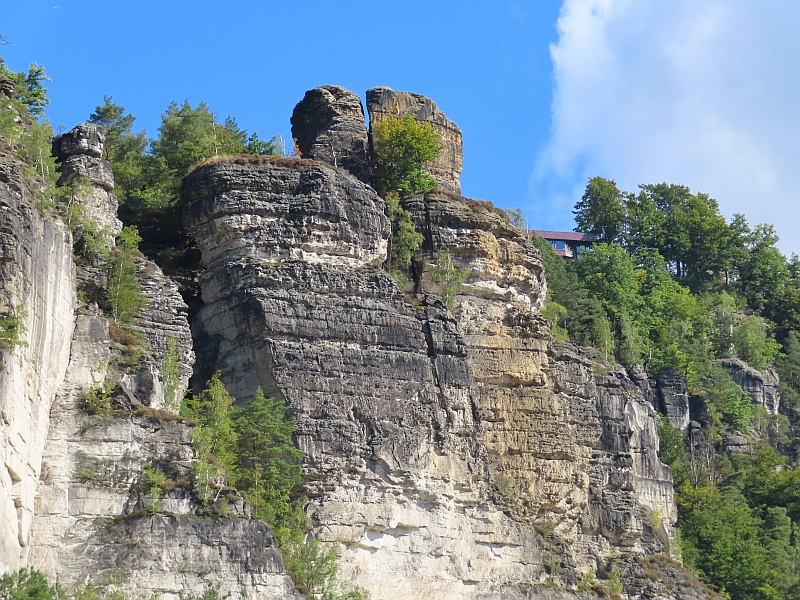
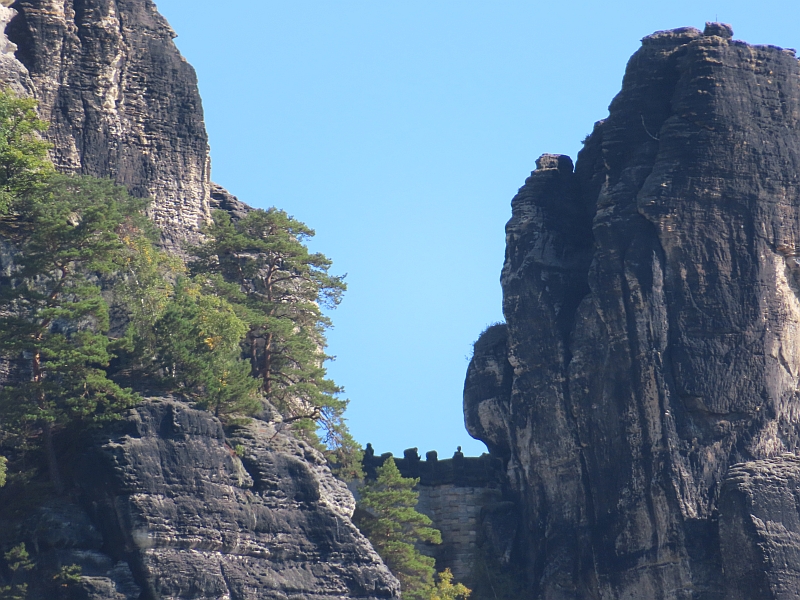
The rock formations of the gorge were incredible |
A bridge links two of the rock pillars |
|
After a magnificent cruise up through the stunningly beautiful Elbe Gorge with our captain personally guiding the ship along the channel, which at times presented just 3 inches of water beneath our keel, we left the ship and boarded a coach which took us up to the top of the rocks that we had just sailed past. Known as the 'Bastei', or Bastions, they originally protected an adjacent rock castle whose access was via a small footbridge which connected two of the pillars. The views from the cliffs were amazing, and we were very glad that the original steep steps down the rock face to the bridge had been replaced with modern pathways that were much easier for tourists such as ourselves to navigate.
 |
 |
 |
 |
From the top of the Bastei rocks we could admire beautiful views of the river Elbe, along which we had just sailed |
The original steps down to the bridge |
||
 |
 |
 |
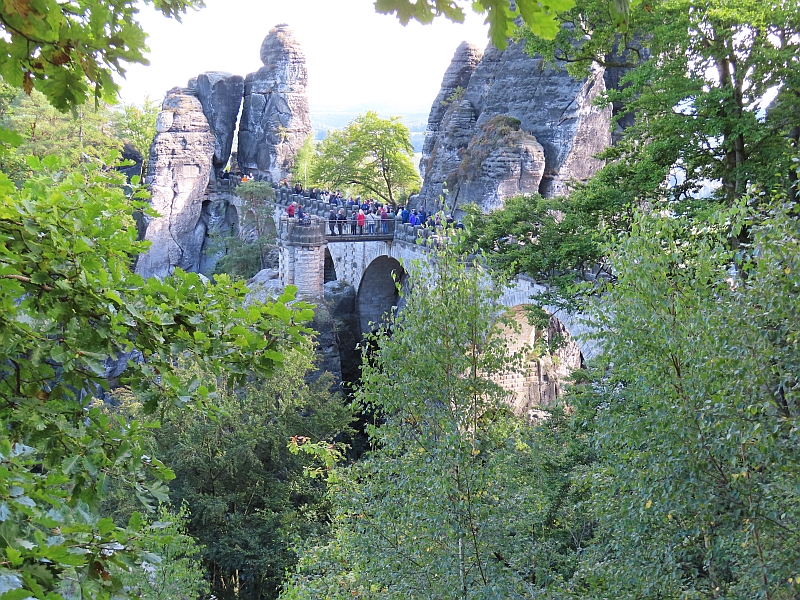 |
This stone footbridge, that connects the pillars, was originally the pathway to the fortress |
|||
We returned to the ship for our last evening on board, and packed our cases again, ready for an early morning pickup by the coach that would take us onwards to Prague.
All pictures on this site are © Allan Jones unless otherwise stated.
