May 2007 and October 2011 trips to Russia
The Boaters Page
2007 Moscow to St Petersburg
If you are using a tablet or phone you may prefer to view these photos
in my FlickR album
Or you can JUMP straight from here to 2011
The 1000-mile journey from Moscow to St Petersburg can only
be undertaken from May to September; at other times most of it is frozen. It is
busy with shipping at all times, not just the tourist ships such as we were on,
but also a great many barges which are generally pushed singly or in pairs by
giant push-tugs; their cargoes are generally timber, or sand and gravel.
Unusually, we even saw a submarine arrive in Moscow along the canal.
 |
 |
 |
 |
 |
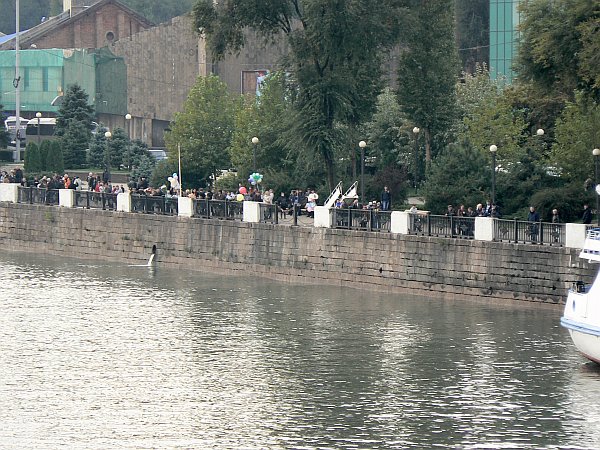
Evening at Moscow River Station
|
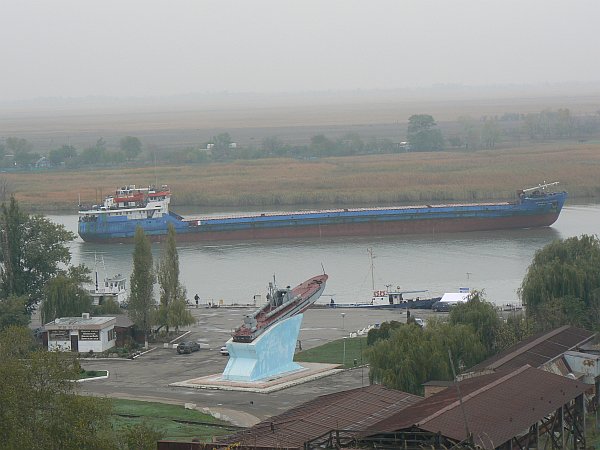
A surprise arrival: a submarine
|
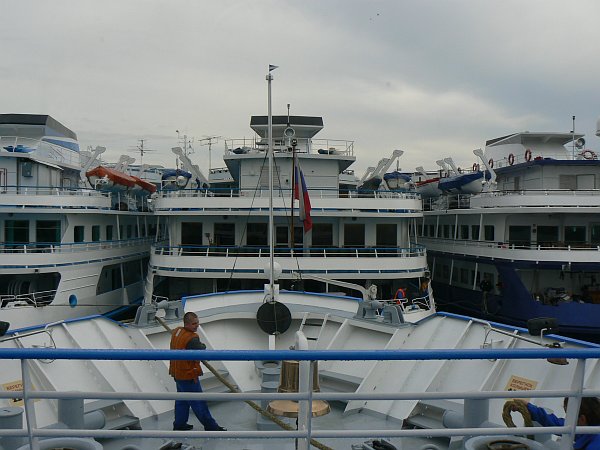
Sometimes moorings are scarce
|
Working on our anchor
|
A larger cruise ship overtakes us
|
 |
 |
 |
 |
 |
Self-propelled timber barge
|
Push Tug
|
Push Tug
|
Push Tug
|
Push Tug Train
|
 |
 |
 |
 |
 |
Waiting in the Neva River one-way system
|
Smaller traffic
|
Smaller traffic
|
Maintenance boats
|
Boatyard
|
 |
 |
 |
 |
 |
Boatyard
|
Under repair
|
In need of repair
|
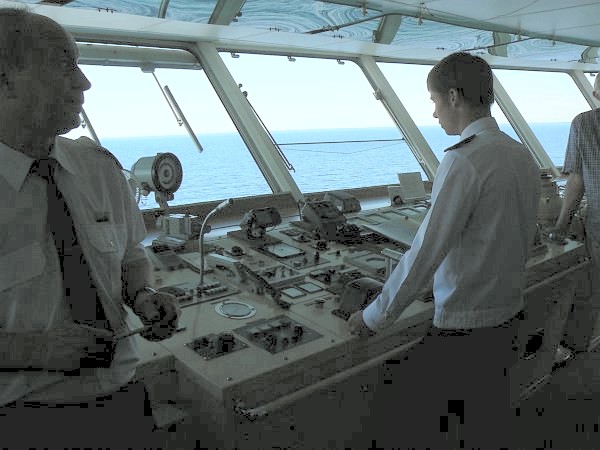
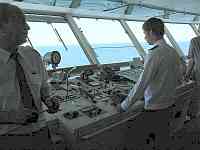
On our Bridge
|
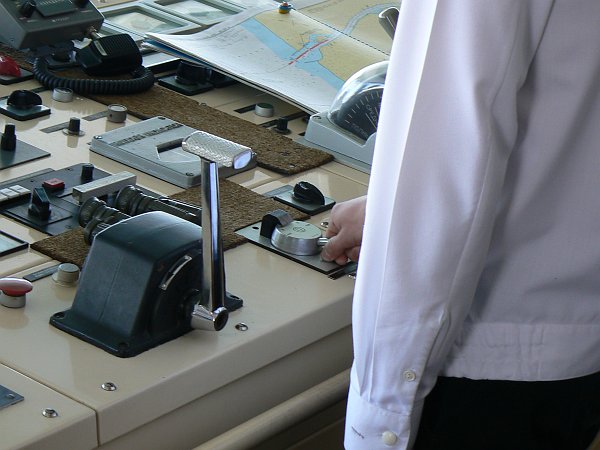
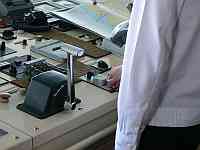
The ship is steered by a tiny joystick. The larger lever is for the
bowthruster
|
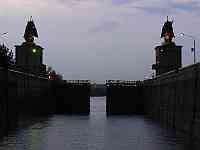
For the first 75 miles you are on the Moscow Canal which
was built in 1937; it lowers you by 160 feet through 6 locks to the Volga River.
The locks are wide enough for only a single ship, but easily long enough for two
ships. There are floating hooks in the lockside for the ropes, but the remains
of the original sets of bollards can often still be seen. The top gates are
unusual in that they usually lie flat on the canal bed, and are rotated into an
upright position once the ship has passed over them.
 |
 |
 |
 |
 |
Moscow Canal architecture is similar to England's Gloucester and Sharpness
Canal. This building controls a stop-gate
|
To navigate across the many lakes and even along some of the twisting
rivers, leading marks are used extensively
|
When the leading marks are lined up like this you are on the right course
|
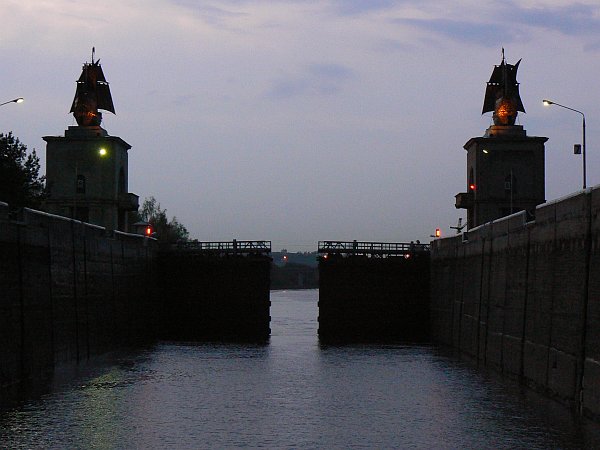
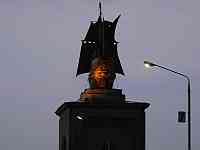
The locks have impressive decorations ...
|
... which are illuminated at night
|
 |
 |
 |
 |
 |
Entering the first lock on the Moscow Canal
|
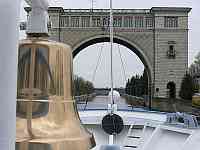
Some locks have very impressive entrances
|
The locks are up to 40 feet deep
|
They are only just wide enough for one ship
|
Although sometimes there is room for a smaller boat to sneak in as well
|
 |
 |
 |
 |
 |
This lock was duplicated in 1992 to ease congestion, but one of the pair is
no longer in use
|
The top gate mechanism
|
The top gate rotates to lie flush on the canal bed, then rotates when the
boat has passed
|
The original bollards set into the wall ...
|
... have now been replaced by floating bollards
|
 |
 |
 |
 |
 |
Approach the floating bollard ...
|
... get ready to throw the rope, ...
|
... throw it and miss, ...
|
... throw it again and miss again, ...
|
... throw it a third time and hook on to the bollard
|
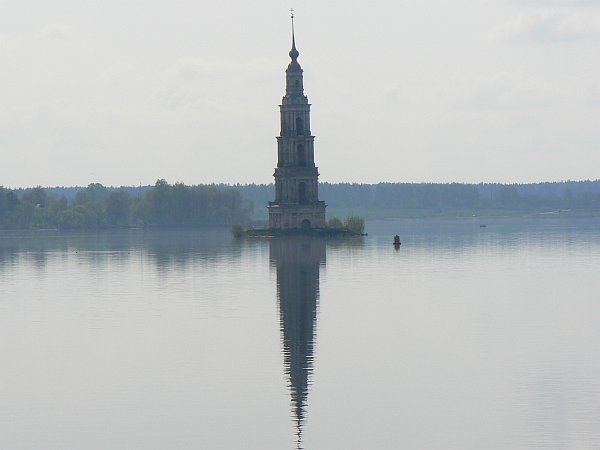
At first on the Volga river you are on the Uglich
reservoir, which was created to power a hydro-electric power station. At one
point the spire of a church still stands above the water as a forlorn monument
to a drowned village. Strangely you travel downstream eastwards on the Volga,
but after a brief diversion to the city of Yaroslavl you turn north in the
middle of the next reservoir onto a tributary (the River Sheksna) while the
Volga turns south to head for the Caspian Sea.
The next lock, rising 40 feet to the summit level of the
1964 Volga-Baltic Canal proved such a bottleneck to traffic that in 1992 it was
duplicated, but the second chamber is no longer in use and the gates have been
replaced by a brick wall. A flight of 6 locks follows, taking you down 230 ft to
Lake Onega, which at over 150 miles long and 55 miles wide is the second largest
lake in Europe. At the northern end of this lake is the island of Kizhi, which
is a popular tourist stop and a Word Heritage Site with its museum of wooden
buildings. The waters of the lake are exceptionally clean and pure, due partly
to the quantity of charcoal on its base from the dense forests which surround
it.
The treacherous river Svir connects Lake Onega to Lake
Ladoga, is described as “somewhat of a nightmare from a navigational standpoint,
being plagued with shallow stretches, narrow rapids, blind bends, dense fogs,
and the constant threat of floating debris such as tree trunks”. Lake Ladoga’s
waters unfortunately are not so pure. The pollution comes mainly from dirty
chemical plants by the lakeside, which is unfortunate since this lake is one of
the main water supplies for St Petersburg. It is also the largest lake in
Europe, measuring about 130 miles long and 80 miles wide as well as being
exceptionally deep.
The river Neva flows from Lake Ladoga down to St
Petersburg. It is narrow, twisting, and fast-flowing. Ships travel westwards
during the even-numbered hours starting at 12, 2, 4, 6, 8, or 10 o’clock, and
eastwards during the odd-numbered hours starting at 1, 3, 5, 7, 9, or 11
o’clock. On the hour, everybody simply drops anchor and waits until the next
hour.
The River Neva at St Petersburg is crossed by massive 8
lift-bridges. They are lifted to allow boat traffic every night between 1.30 and
6.30 am; between those hours there is no way of crossing from one side of the
city to the other (although recently a high-level suspension bridge has been
built at the eastern edge of the city). St Petersburg itself has been nicknamed
“the Venice of the North” since it stands on 42 islands, with 65 rivers and
canals being crossed by over 600 bridges. Many of the canals are busy with
trip-boats, which appear to be powered by some sort of water-jet system.
 |
 |
 |
 |
 |
Unusual river traffic in St Petersburg
|
The fastest way to commute in St Petersburg
|
We board our canal trip boats
|
The trip boats appear to use water jet propulsion. Here one engages 'full
astern' to stop and moor
|
Aiming for the canal off the river Neva
|
 |
 |
 |
 |
 |
Some of the bridges are quite low
|
There is quite a lot of traffic on the canals ...
|
... of varying types, but mainly for pleasure
|
St Petersburg is beautiful when seen from the canal
|
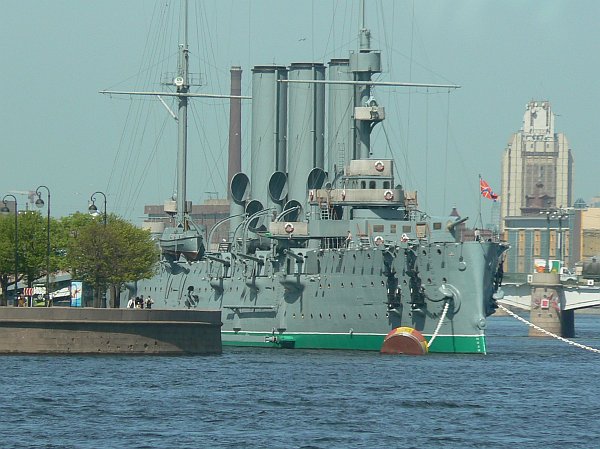
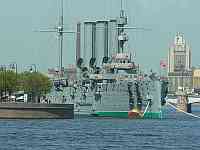
The cruiser Aurora
|
There are apparently a number of sailing ships on the
river, but they are all replicas built to act as restaurants. Of some interest
however is 19th century cruiser “Aurora” which is an impressive sight
with its 4 giant funnels. Its main claim to fame however must be that in 1917 it
fired a single blank shell to signal the start of the 1917 October Revolution.
2011 Update, St Petersburg to Astrakhan and Rostov-on-Don
In 2011 we returned to St Petersburg to join the autumn migration south to
Rostov-on-Don to escape the winter ice. On this trip we retraced our steps from
St Petersburg up the Neva and to Uglich before following the Volga all the way
to Astrakhan on the Caspian Sea, then by the Volga-Don Canal to Rostov-on-Don.
The ship was a little bit larger, capable of carrying almost twice as many
passengers.
Starting from St Petersburg we joined the Neva river traffic and made good
progress until we reached the main River Volga whose level was very low indeed,
and we had to wait for several hours with a queue of other boats above one lock before Nizhny
Novgorod while the river in
the next stretch was gradually brought back up to navigable level.
 |
 |
 |
 |
 |
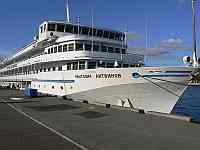
Our ship, the Maxim Litvinov
|
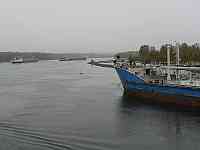
River traffic on the Neva at St Petersburg
|
Push-tugs are still extremely popular
|
Often the tugs push more than one barge
|
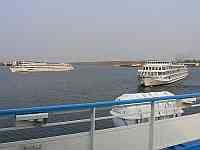
Passenger ships waiting for better water levels
|
 |
 |
 |
 |
 |
A few cargo ships also waited for better water levels
|
Low water levels on the Volga near Nizhny Novgorod
|
Low water levels on the Volga near Nizhny Novgorod
|
Low water levels on the Volga near Nizhny Novgorod
|
Low water levels on the Volga near Nizhny Novgorod
|
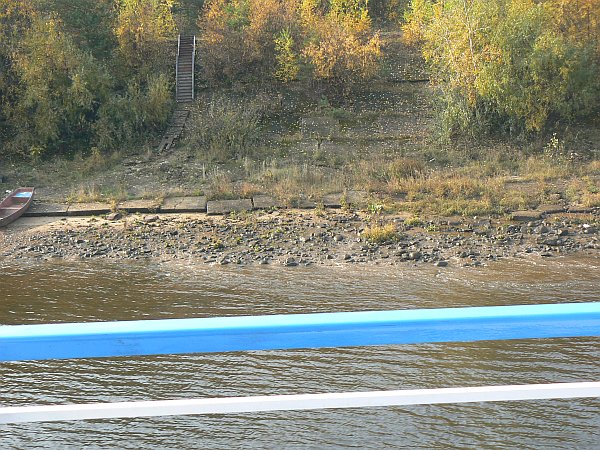
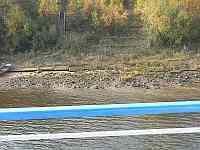
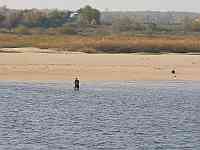
The level in the stretch of river to Nizhny Novgorod was certainly very low
indeed, and we crawled along the centre of the river with the bottom of the ship
brushing against the river bed. The captain told me later that he can navigate
as long as there is at least 18" of water beneath the keel; for this part of the
trip we must have been right on that limit.
We encountered a fascinating suction dredger, which had an extremely long
tube to discharge silt outside the navigation channel, as well as a much smaller
dredger of a more traditional style.
 |
 |
 |
 |
 |
As we approached this, we could not work out what it was.
|
This end of the dredger sucks silt from the river bed.
|
The silt is pumped along this floating pipeline ...
|
... and discharged outside the navigation channel.
|
A more conventional dredger, using large scoops.
|
 |
 |
 |
 |
 |
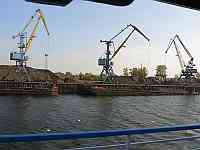
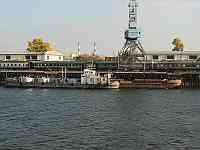
The docks at Kazan
|
The docks at Kazan
|
The docks at Kazan
|
The docks at Kazan
|
The docks at Kazan
|
 |
 |
 |
 |
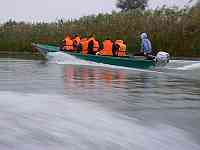 |
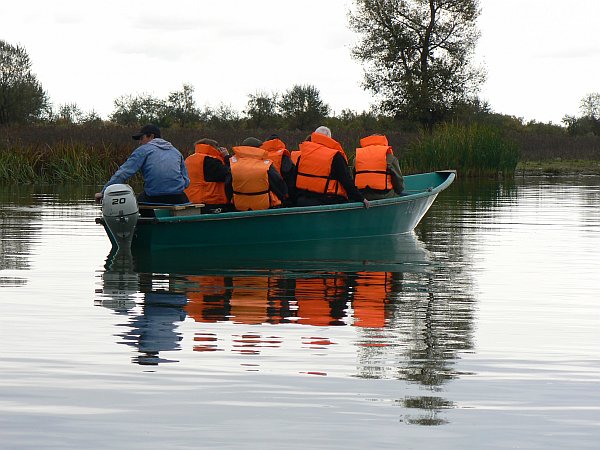
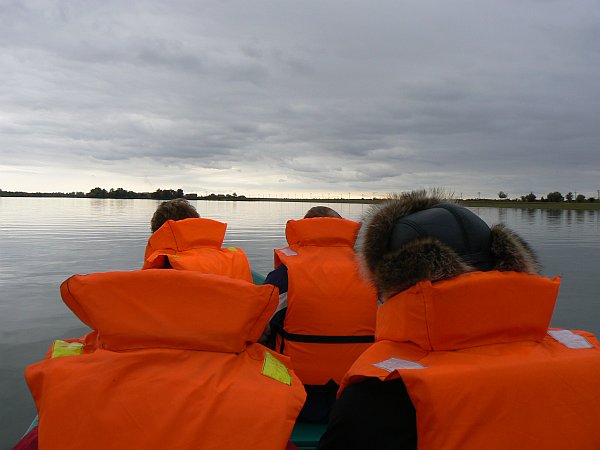
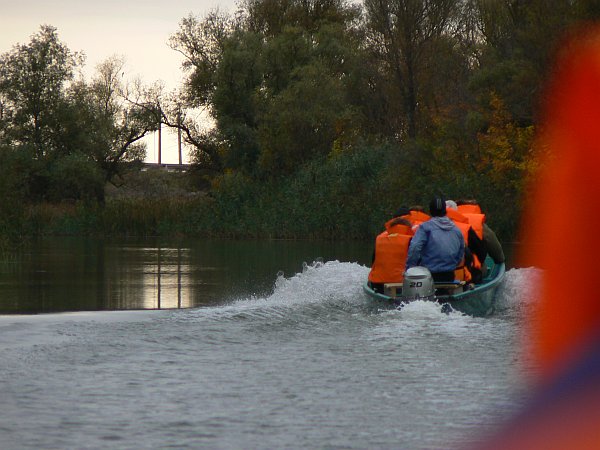
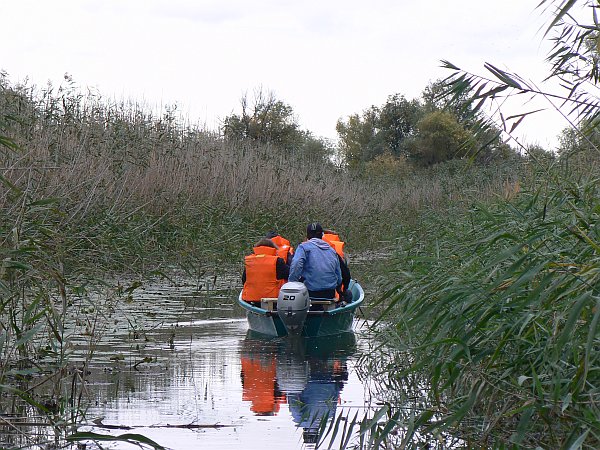
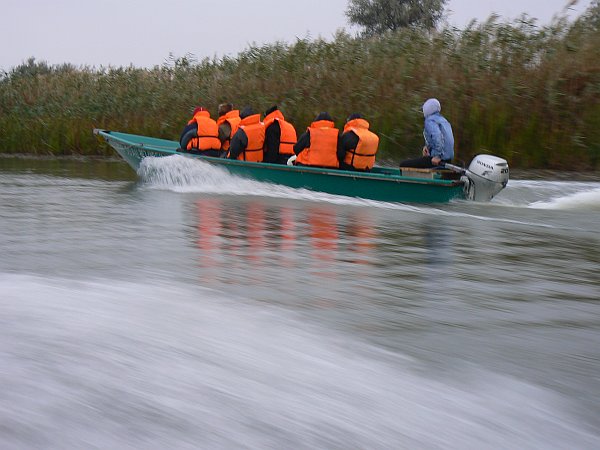
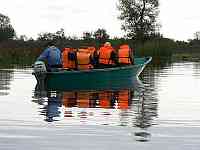
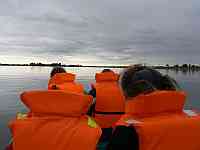
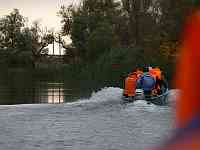
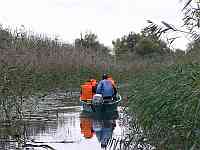
Exploring the Volga Delta in a small boat
|
Exploring the Volga Delta in a small boat
|
Exploring the Volga Delta in a small boat
|
Exploring the Volga Delta in a small boat
|
Exploring the Volga Delta in a small boat
|
After spending an afternoon in a small boat exploring the Volga Delta near
Astrakhan, we returned upstream and prepared to enter the Volga-Don Canal.
 |
 |
 |
 |
 |
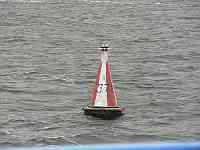
The channel in the Volga is marked with Red buys
|
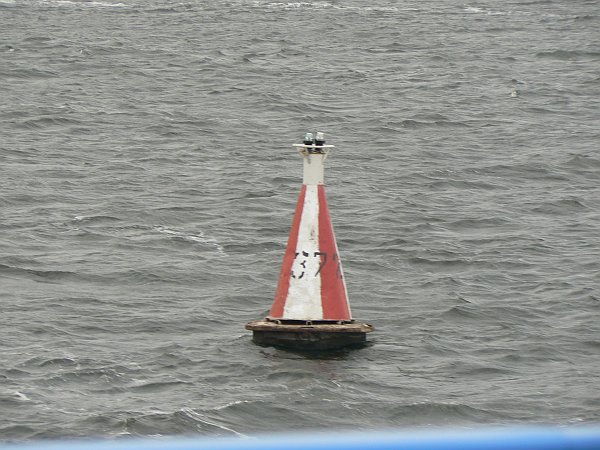
A striped buoy marks where the channel divides to enter the Volga-Don
Canal |
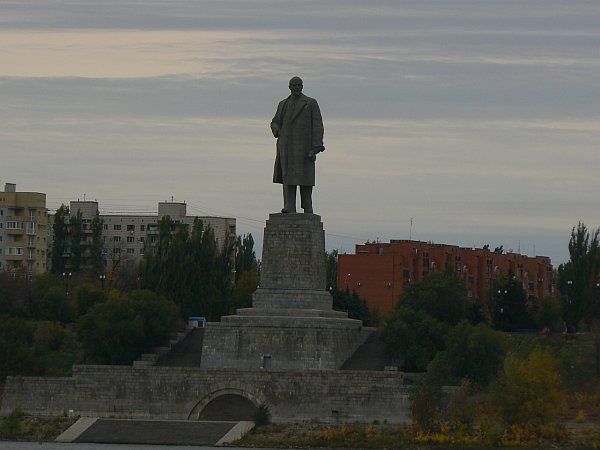
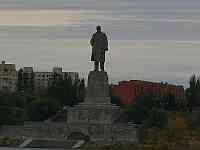
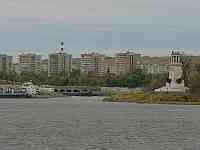
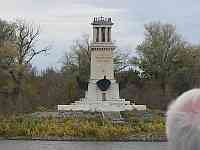
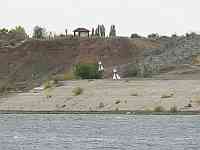
The canal entrance is also marked by a statue of Lenin ... |
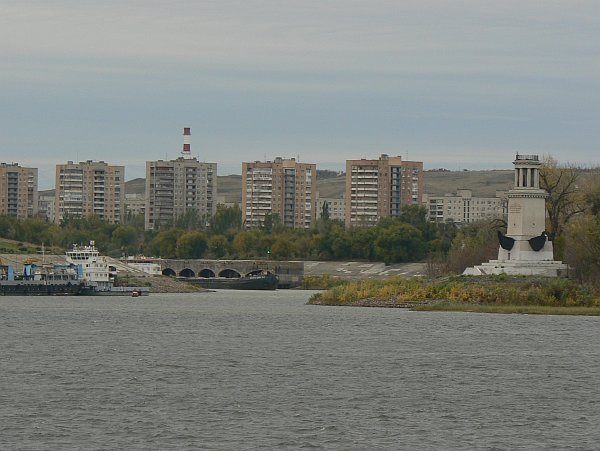
... and by a lighthouse (no it's not the red-and-white striped tower
over the flats) |
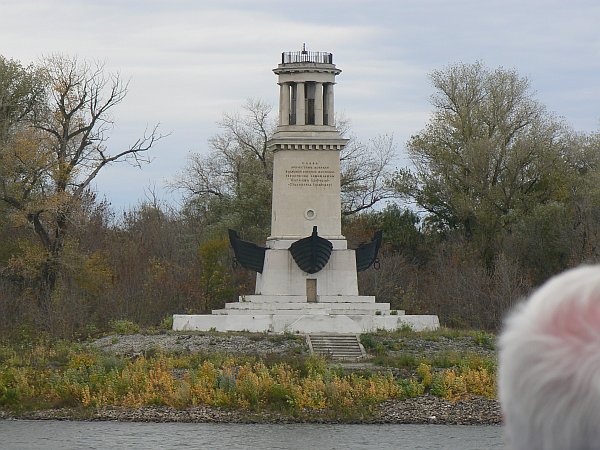
The lighthouse at the entrance to the canal |
 |
 |
 |
 |
 |
Pairs of leading marks also show the way into the canal
|
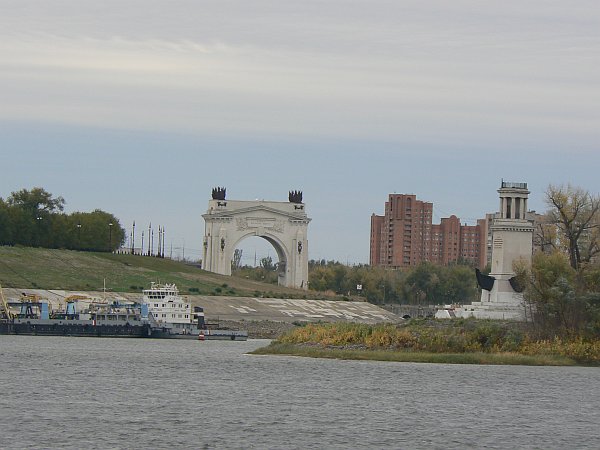
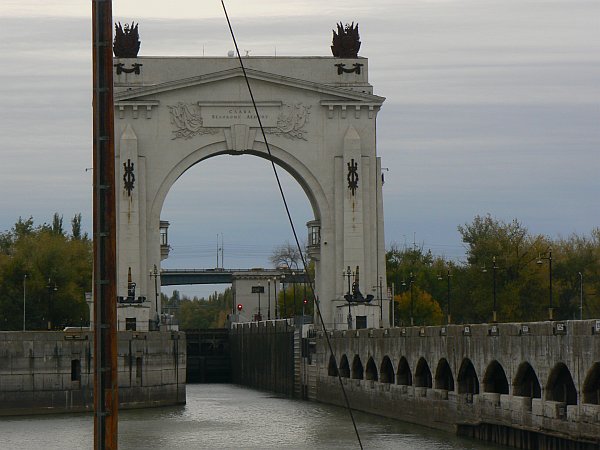
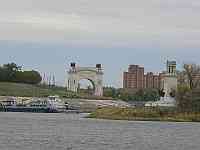
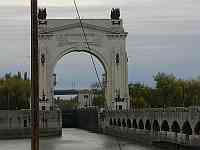
The arch over the first lock comes into view |
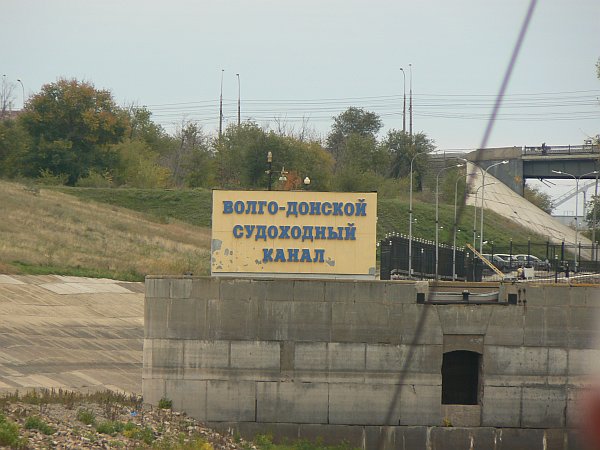
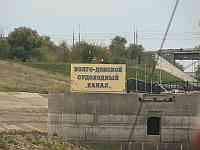
A large signboard confirms that you are in the right place |
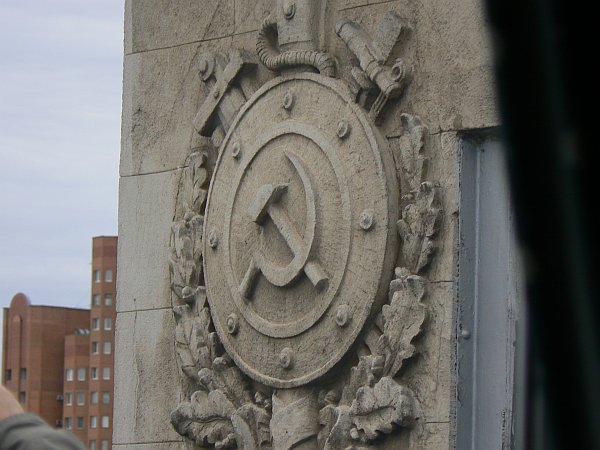
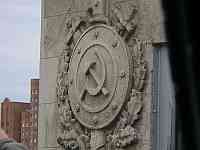
The Hammer and Sickle motif is prominent at the lock |
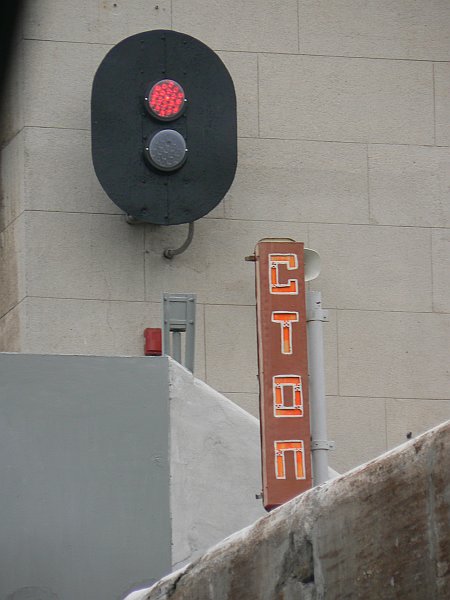
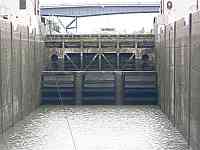
Red lights show while the gates are opening |
 |
 |
 |
 |
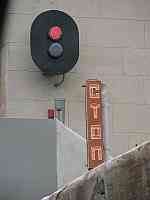 |
Still waiting at the red light |
We have a green light to proceed into the lock
|
Entering the lock, we are a very tight fit indeed |
We have to go as far forward as possible |
When we are in the right place, the red light comes on and the "STOP"
sign illuminates |
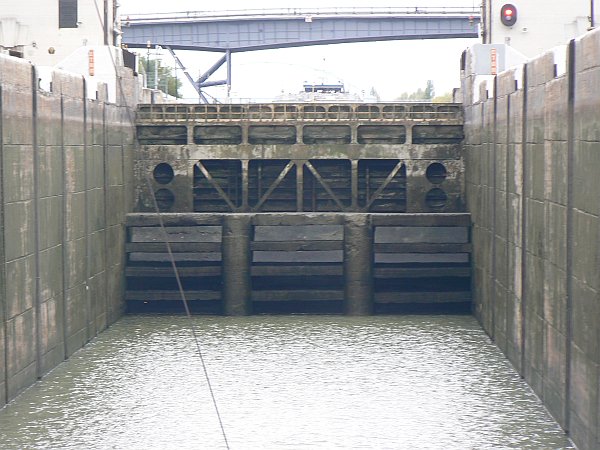
There are nine locks in the flight from the Volga up to the summit level, and
boats were queuing in both directions for every lock. The total passage time for
the flight was about 6 hours. The locks had one interesting design feature,
namely an 'arrester' wire that is stretched across the lock chamber ahead of the
lower gates, so that a downhill boat which fails to stop in time will
(hopefully) be brought to a halt before it demolishes the lower gates. The wire
works on the same principle as that on an aircraft carrier, in that while one
end is fixed in place the other end is attached to a series of weights which
will be raised by the wire to provide a steadily increasing force. I do not know
what the breaking strain of this arrangement would be, but I find it hard to
imagine it bringing a 5000 ton barge to a halt within the required few feet of
travel unless it was moving extremely slowly already. The wire is moved out of
the way by a small crane before the gates are opened.
 |
 |
 |
 |
 |
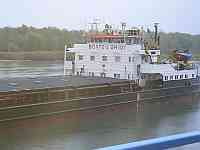
Passing a push-tug in the short pound between the first two locks
|
Entering the second lock we can see that the next downward-bound boat is
just above the top gates |
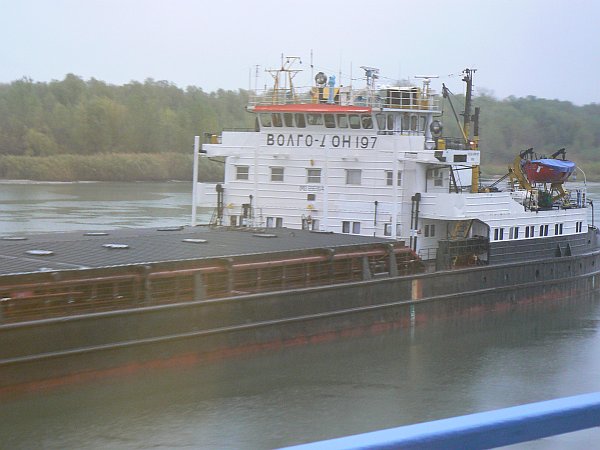
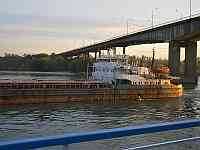
A typical Volga-Don boat (number 197) |
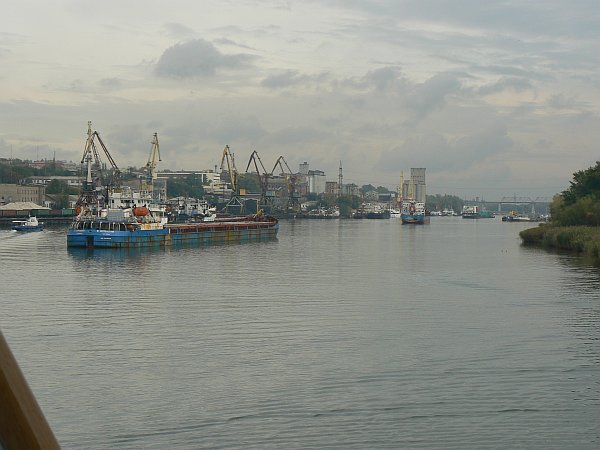
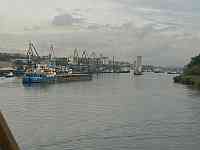
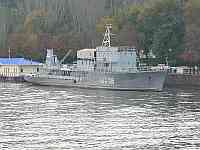
The river at Rostov is very busy with traffic both moving and moored |
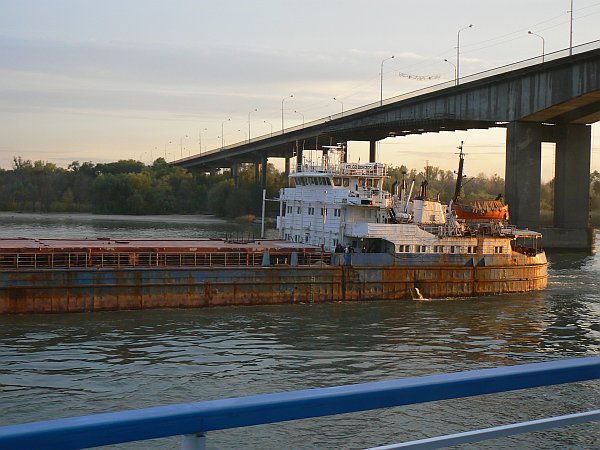
Some boats are not as smartly painted as others |
The summit level of the canal is a huge reservoir, 45 km across but with a
narrow zig-zag navigation channel marked by a system of buoyage which I found
very difficult to understand, and then there are locks down to the river Don
leading to Rostov where the captain performed an interesting manoeuvre before
reversing the last quarter mile towards his mooring spot.
 |
 |
 |
 |
 |
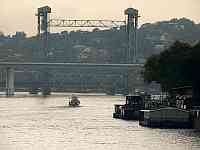
This small boat at Rostov seemed to be acting as a ferry
|
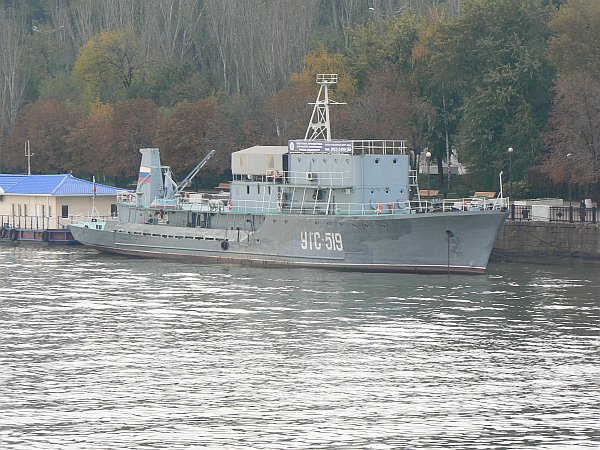
Moored on the quayside at Rostov |
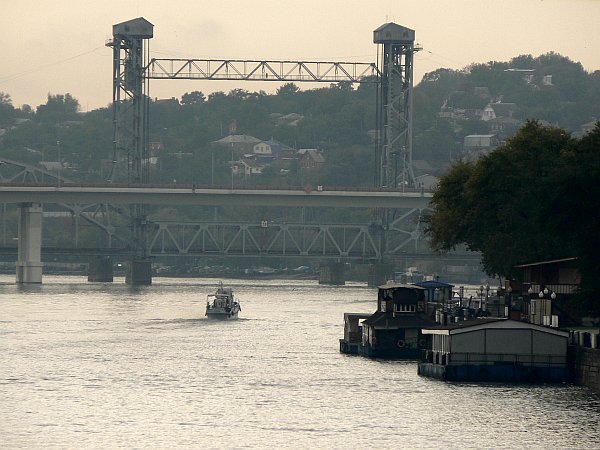
A lift bridge in the distance downstream of Rostov |
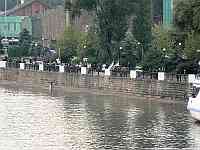
The quayside at Rostov |
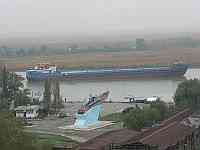
A ship from the Don heads for the Black Sea past Azov |
All pictures on this site are © Allan Jones unless otherwise stated